
 Account

3DCoat 2026.11: Everything New in the Latest Release
POSTED 27th OF Jul, 2026, Posted by Summer Magdaraog

POSTED 27th OF Jul, 2026, Posted by Summer Magdaraog

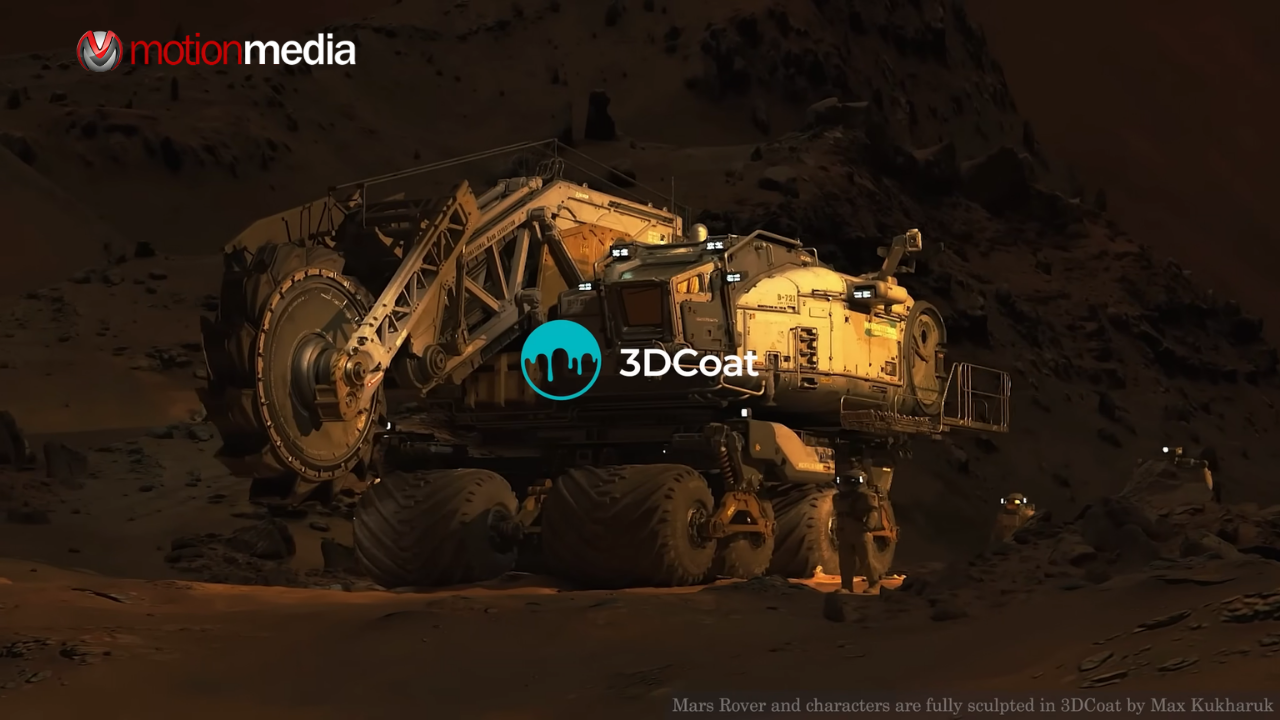
3DCoat 2026.11 introduces a new GPU-powered Node System that expands procedural workflows across texturing, sculpting, and material creation. The update adds a visual node editor for building non-destructive materials, masks, modifiers, filters, and volumetric textures while keeping every parameter editable throughout production.
Beyond the new Node System, this release introduces voxel lattice generation for engineering and 3D printing, procedural sculpt patterns, an expanded physically based material system with 30 channels, new parametric modeling tools, retopology improvements, and broader interoperability through LWO3 import and GLB export.
The headline feature in 3DCoat 2026.11 is the introduction of the 3DCoat Node System, a visual editor for creating procedural materials and texture effects.
Instead of relying solely on traditional pixel painting, artists can create materials using interconnected nodes that control surface appearance and behavior. Every parameter including base color, glossiness, rust intensity, scratches, masks, and other material properties remains editable throughout the project.
Changes are applied immediately to the model, allowing artists to refine materials without repainting textures or rebuilding material layers.
The new workflow supports:
The Node System is designed to leverage GPU acceleration.
Procedural effects, mathematical operations, blending functions, and noise generators are dynamically compiled into optimized shaders using NodeGraph Language (NGL) and calculated directly on the graphics card.
This enables faster evaluation of procedural node graphs and smoother interaction while editing complex materials.
The Node System also works directly with sculpt objects.
Artists can preview procedural materials while sculpting instead of waiting until retopology or UV mapping is complete. Because the material updates in real time, sculpting and look development can happen simultaneously.
The workflow supports both Per-Pixel Painting and shader previews for sculpt objects.
The Node System introduces multiple procedural asset types that extend beyond traditional material creation.
Procedural Smart Materials respond automatically to model characteristics such as curvature and ambient occlusion, allowing a single material setup to adapt across different assets.
Procedural masks generate editable wear, scratches, dirt, edge damage, and other surface effects without requiring manual painting.
Procedural Modifiers apply non-destructive geometric deformation through reusable node-based operations.
Procedural Filters modify existing layer or object data rather than generating entirely new textures, making post-processing adjustments fully editable.
Volumetric textures exist in three-dimensional space instead of relying on UV layouts, allowing seamless procedural materials without visible UV seams.
3DCoat 2026.11 adds the ability to generate complex internal voxel lattice structures for any 3D model.
These lattices can be used to create lightweight internal geometries for additive manufacturing while reducing material consumption and maintaining structural strength. The same technology can also be used to create decorative volumetric patterns and complex internal structures for artistic workflows.
Procedural nodes can now generate both volumetric and surface patterns during sculpting.
Once generated, the procedural geometry can be converted into a standard sculpt object for additional editing using existing sculpt tools.
This combines procedural generation with traditional sculpting workflows.
The physically based material system now supports 30 material channels.
In addition to standard PBR properties, artists can work with advanced material channels for more complex light interaction and refraction, providing greater flexibility when creating physically based surfaces.
The release includes a rebuilt library of built-in node-based materials and masks.
The library contains:
Every material remains editable after application through the Node System.
Several modeling and sculpting tools have also been expanded.
The Sculpt and Modeling workspaces now include text search within the Quick Access toolbar, making tools easier to locate.
A new inGizmoTransform node controls the position, rotation, and scale of textures, triplanar projections, procedural patterns, and lattice structures.
The new Splitter tool separates a model into multiple objects while automatically placing each object on its own layer.
The On-Plane tool now supports lofted surfaces created from curves, allowing artists to sculpt directly on generated voxel surfaces.
Retopology meshes can now be converted into Hybrid Meshes and used as sculpting surfaces for voxel workflows.
A new parametric Hollow Box primitive enables procedural creation of hollow geometric shapes through adjustable parameters.
Complex parametric models can now be generated using two or three curves, with automatic updates as curves or control handles are modified.
Four Smart Hybrid Primitives have been added:
These presets simplify the creation of common industrial and product shapes.
The Retopo and Modeling Rooms now include a hierarchical Group Tree system similar to the Sculpt workspace.
Artists can organize parent-child object hierarchies while moving, scaling, rotating, copying, and managing complete object branches.
The Bevel tool now includes a new Profile Shape option for greater control over edge profiles.
The Pose tool introduces additional deformation modes and the ability to snap meshes directly to object surfaces.
The curve bending algorithm has been updated to produce smoother and more predictable deformation results.
3DCoat 2026.11 expands interoperability with additional file format support.
Models created in LightWave 3D can now be imported using the LWO3 format.
GLB export has been added, improving compatibility with Blender and other applications that support the glTF/GLB format.
This release is particularly relevant for:
3DCoat 2026.11 introduces new procedural workflows for texturing, sculpting, modeling, and 3D printing while expanding interoperability with modern 3D production pipelines.
If you're planning to upgrade or add 3DCoat to your workflow, Motion Media is an authorized reseller offering genuine licenses for professional artists, designers, studios, and educational institutions.
Explore available licensing options or contact our team to find the right 3DCoat edition for your workflow.
Share: